How to Help Your Baby or Toddler Learn Language—Without the Pressure
Did you know that before they were even born, babies were already fascinated by human voices? As a language lecturer, I’ve spent years studying how we acquire language, but it is still an amazing experience to watch it unfold in real life with my own daughter! From the moment she arrived in our lives, she was soaking up the sounds around her, tuning into the rhythm of speech—even before she had words of her own.
Now, as a toddler, that curiosity hasn’t gone anywhere. Every day, I see her experimenting, mixing words from both our languages, and making sense of the world through the words we share. And the best part? She’s learning not because I’m giving her structured lessons or lectures, but because language is simply part of our life together and she wants to communicate.
For anyone wondering how to support their child’s language development—whether in one language or two—rest assured that there’s no need for flashcards or special programs. Everyday life is full of opportunities to build language skills in natural, meaningful ways. These are some of the things that have worked for us and that I’ve seen help so many language learners gain confidence in communicating.
Talking to Your Toddler: The Power of Everyday Conversations
One of the simplest and most powerful ways to support language acquisition is by boosting their exposure to the language – so talking to babies and toddlers as much as possible, right from the start. In the beginning, I felt a bit silly narrating my day to a newborn who obviously couldn’t reply, but now I can see how those early conversations formed the foundation of her language. Whether we’re walking to the park, getting dressed, or having a cuddle before bed, talking about what’s happening has become second nature.
Simple comments like “Time to put your shoes on—one foot, then the other!” or “Shall we get some apples at the supermarket? Look, these ones are red and shiny!” can turn everyday things into learning opportunities. Pairing words with gestures or actions also seems to make a big difference, because toddlers rely so much on non-verbal communication when figuring out meaning.
One-on-One Time and Face-to-Face Conversations
Some of my favourite moments of language learning happen during one-on-one time, especially when there aren’t too many distractions. Getting down to my daughter’s eye level means she can see my face, my expressions, and the way my mouth moves as I speak. This is particularly useful for bilingual children who are sorting out two languages at once.
Mixing in familiar words with a few new ones helps expand vocabulary naturally. If she points at a cat, I might say, “Yes, that’s a cat! It has soft fur. What do cats say? Meow!” Over time, little expansions like this add up.
She also mixes her two languages regularly, which is completely normal code-mixing. Rather than correcting her, I just repeat the sentence in my language:
👧: “Daddy Auto!”
👩: “Yes, Daddy’s driving his car to work.”
Hearing both languages consistently helps her sort things out in her own time.
Books: More Than Just Reading the Words
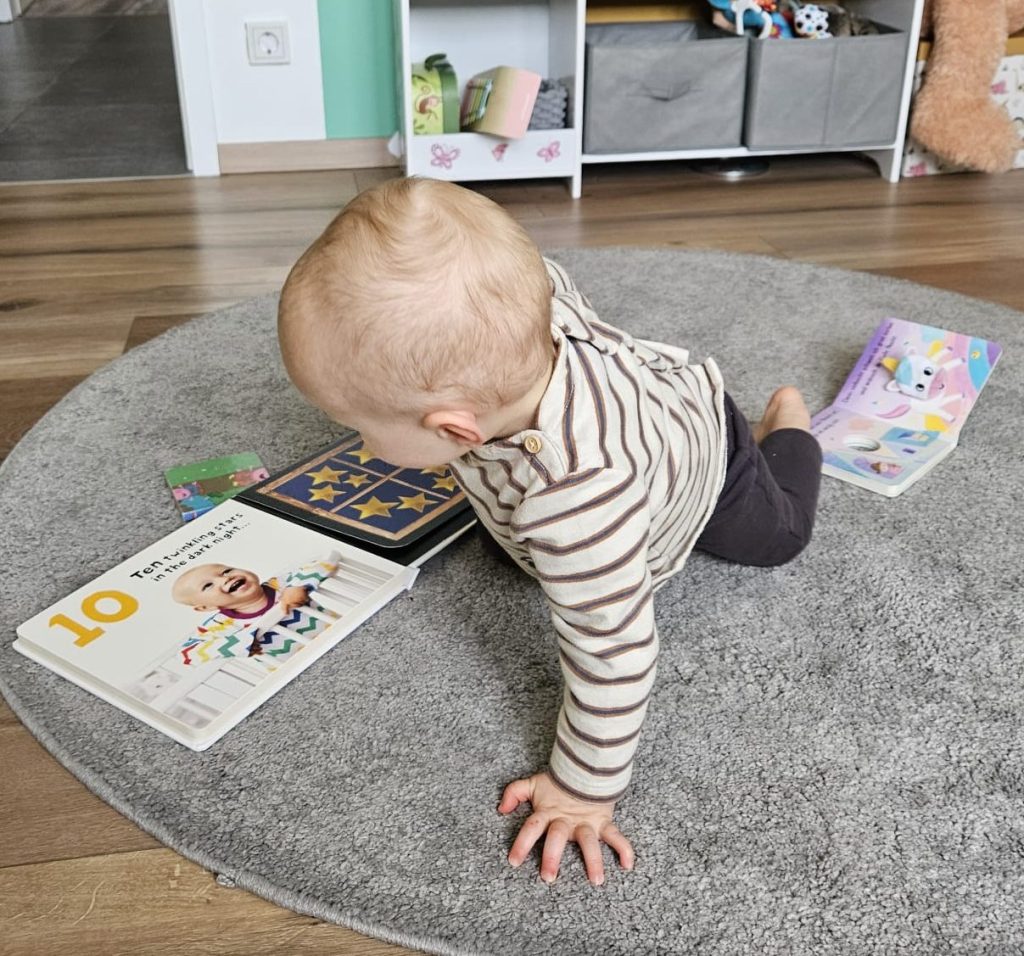
Books have always been important to me, so I was excited to share them with my daughter from the start. But rather than simply reading the words on the page, I’ve found that the best way to engage her is by making books interactive. She loves pointing at pictures, naming objects, and acting out what’s happening. Some days, she wants the same book over and over (hello, Peppa Pig, my old friend), while other times, she flips through and points at things randomly. Either way, every interaction with a book can be really valuable.
For bilingual families, having books in both languages is ideal, but I don’t stress if we don’t have everything in English. If she chooses a book in German, I often live-translate as we go. Since she can’t read yet, she doesn’t mind at all. It’s been a great way to keep English in the mix without needing a separate library of books.
For those looking to build their own bilingual book collection, I shared a great freebie in my post “Supporting Bilingual Children: Get a Free Book!”.
Songs and Rhymes: Fun and Repetitive Learning
Songs have been another huge part of how my daughter picks up language. Action songs like Heads, Shoulders, Knees, and Toes help reinforce vocabulary, and anything with movement keeps her engaged. The repetition makes words easier to remember, and she loves joining in.
We switch between English and German versions of songs, and sometimes we mix the two. At this stage, she’s not worried about which language is which—she just enjoys the rhythm and the interaction.
For those looking for bilingual audio resources, I’ve shared some recommendations in “Present Ideas for Bilingual Children.”.
Bringing Words to Life
Toddlers don’t just listen to what we say; they watch how we say it. The way I use my voice, expressions, and gestures makes a huge difference in how engaged my Little Bean is and how much she picks up.
A lively, varied tone seems to keep her interested, whether I’m describing a bouncing ball or whispering about a tiny caterpillar in a book. At the same time, I try to be consistent with facial expressions—smiling while calling her a “little stinky monster” just leads to confusion! Matching words with tone and body language helps her understand language more easily.
Language Learning Happens in the Little Moments
None of this requires a structured approach or extra time set aside for “learning.” It’s simply about making the most of daily interactions—chatting during everyday routines, reading together, singing songs, and using a warm, expressive voice.
For bilingual families, keeping both languages present in a way that feels natural seems to be what matters most. Whether that means following a strict “one parent, one language” approach or mixing languages more freely, what really counts is making communication feel easy and enjoyable.
And in the end, these moments of talking, singing, and reading together aren’t just about language. They’re about connection, laughter, and shared experiences—things that matter just as much as the words themselves.
What’s Your Experience?
Do you have a little chatterbox at home? Or are you wondering how to support your child’s language development? I’d love to hear your stories in the comments!
 What Mummy Didn't Know